

Why the Tirpitz Terrified Winston Churchill More Than Any Other Ship
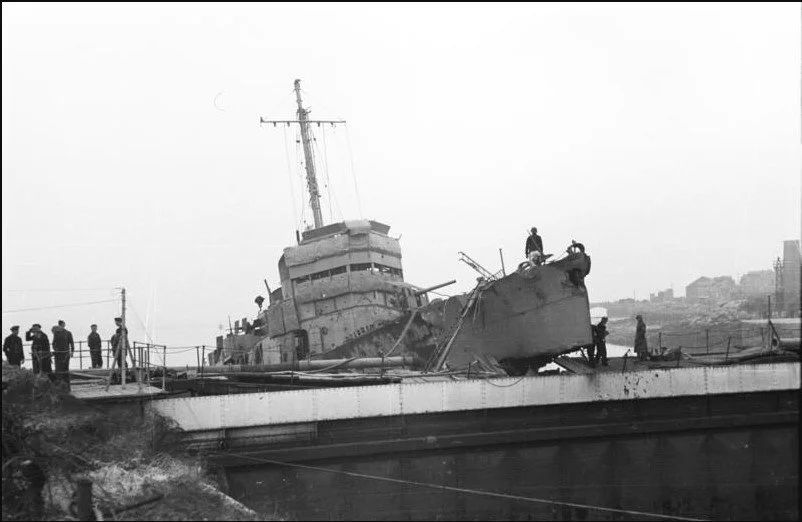
The German battleship Tirpitz never sank a single Allied ship
The German battleship Tirpitz never sank a single Allied ship—yet Churchill called her Britain's greatest naval threat. Author David C. Forward’s latest book, Into the Jaws of Death: Operation Chariot and the Raid that Saved Britain explains why the mere existence of this 50,000-ton monster nearly changed the outcome of World War II.
In January 1942, Winston Churchill received intelligence that made his blood run cold: the German battleship Tirpitz had completed sea trials and was now operational in Norwegian waters. Britain's Prime Minister—a former First Lord of the Admiralty who understood naval strategy better than perhaps any other world leader—immediately grasped what this meant.
"The destruction of the Tirpitz is the greatest event at sea at the present time," Churchill wrote in a memo to his military chiefs. "No other target is comparable to it... The entire naval situation throughout the world would be altered."
This wasn't hyperbole. Despite never firing her main guns at an Allied convoy, despite sinking no merchant ships, despite spending most of the war swinging at anchor in Norwegian fjords, Tirpitz was the ship Churchill feared most. Understanding why reveals the strategic chess match at the heart of the Battle of the Atlantic—and explains why Operation Chariot had to succeed.
The Sister of the Bismarck: Specifications of a Super-Battleship
Tirpitz was the sister ship of the infamous Bismarck—and in several ways, she was even more formidable. Commissioned in February 1941, she was the largest battleship ever built by Germany and one of the most powerful warships afloat.
Her specifications were staggering:
• Displacement: 53,000 tons (fully loaded)
• Length: 823 feet
• Beam: 118 feet
• Main armament: Eight 15-inch guns in four twin turrets
• Secondary armament: Twelve 5.9-inch guns, sixteen 4.1-inch anti-aircraft guns, plus dozens of smaller weapons
• Armor: 12.6-inch belt, 14.6-inch turret faces
• Speed: 31.5 knots maximum
• Range: 9,000 nautical miles at 19 knots
• Torpedo tubes: Unlike Bismarck, Tirpitz was equipped with torpedo tubes for anti-ship attacks
Her diesel and steam turbine engines were more powerful than Bismarck's, giving her a crucial speed advantage. Her fire control systems represented the pinnacle of German naval engineering. She could engage targets at ranges exceeding 20 miles with devastating accuracy.
Most importantly, she was designed to hunt and destroy Allied convoys in the North Atlantic.
The Shadow of the Bismarck: Why Britain Feared a Repeat
To understand why Tirpitz terrified Churchill, we must first remember what happened with her sister ship.
The Hunt for Bismarck: May 1941
In May 1941, Bismarck broke out into the Atlantic on Operation Rheinübung with the heavy cruiser Prinz Eugen. The British Home Fleet intercepted them in the Denmark Strait between Iceland and Greenland.
What happened next shocked the world.
On May 24, 1941, Bismarck engaged HMS Hood—the pride of the Royal Navy, considered unsinkable—and HMS Prince of Wales. In less than ten minutes of combat, Bismarck's guns found Hood's ammunition magazines. The "Mighty Hood" exploded catastrophically and sank in less than three minutes, taking 1,415 men with her. Only three survived.
The loss of Hood sent shockwaves through Britain and the Empire. This wasn't supposed to be possible. British battleships and battle cruisers were supposed to be invincible. Yet Bismarck had destroyed the Royal Navy's most famous warship in the first engagement.
Britain mounted the largest naval hunt in history to destroy Bismarck. Six battleships, two aircraft carriers, thirteen cruisers, thirty-three destroyers, and numerous patrol aircraft were diverted from convoy protection duties to chase her down. Even ships escorting Atlantic convoys were stripped away—leaving merchant ships vulnerable to U-boat attack—to join the pursuit.
After a desperate chase across the Atlantic, torpedo bombers from HMS Ark Royal crippled Bismarck's rudder. Unable to steer, she could only steam in circles. On May 27, 1941, British battleships caught up and battered her into a burning wreck. She sank with over 2,000 men aboard.
But the lesson was clear: A single German battleship had forced the Royal Navy to deploy virtually every capital ship it possessed. What would happen if Tirpitz broke out—and unlike Bismarck, she survived?
The Strategic Nightmare: Tirpitz Loose in the Atlantic
Churchill understood what Naval Staff planners told him: Tirpitz in the Atlantic convoy lanes would be catastrophic.
The Convoy Problem
By early 1942, Britain's survival depended entirely on Atlantic convoys. Every week, merchant ships carrying food, fuel, ammunition, and raw materials sailed from North America to British ports. U-boats were already sinking these ships at an unsustainable rate—over 8 million tons of Allied shipping had been lost by January 1942.
The Royal Navy's solution was the convoy system: merchant ships sailed in groups, protected by destroyer escorts. This worked against U-boats but created a different vulnerability.
Convoys were slow—typically 8-10 knots—and predictable. They had to follow specific routes and maintain formation. If a battleship like Tirpitz found them, the results would be apocalyptic.
Consider the math:
• A typical Atlantic convoy contained 30-50 merchant ships
• A destroyer's 4-inch guns couldn't penetrate Tirpitz's armor
• Tirpitz's eight 15-inch guns could sink a merchant ship with a single salvo
• She could engage multiple targets simultaneously at ranges exceeding 15 miles
One battleship could destroy an entire convoy in an afternoon. And with dozens of convoys at sea at any given time, the Royal Navy couldn't possibly protect them all from a capital ship threat.
The Home Fleet Dilemma
If Tirpitz broke into the Atlantic, Britain faced an impossible choice:
Option 1: Deploy battleships to escort every convoy
• Britain didn't have enough battleships
• Battleships consumed vast amounts of fuel oil—already scarce
• Battleships were too slow to catch Tirpitz if she chose to run
• This would strip defenses from other theaters (Mediterranean, Indian Ocean)
Option 2: Hunt Tirpitz with concentrated battle groups
• This meant abandoning convoy protection
• Tirpitz could simply evade the hunters and attack unprotected convoys
• The Bismarck hunt had shown how many ships it took—resources Britain didn't have in 1942
Option 3: Hope Tirpitz didn't break out
• Unacceptable to Churchill, who had seen what Bismarck accomplished
The Admiralty concluded that even one successful Tirpitz sortie—sinking just two or three convoys—would create a shipping crisis that might force Britain to sue for peace.
"The Whole Strategy of the War Turns on This Ship"
Churchill's obsession with Tirpitz permeated his wartime correspondence. In memo after memo, he pressed his military chiefs for plans to neutralize her:
"The destruction of the Tirpitz is the greatest event at sea at the present time. No other target is comparable to it." (January 25, 1942)
"I regard the matter as of the highest urgency and importance... The whole strategy of the war turns at this period on this ship." (March 2, 1942)
He wasn't exaggerating. British strategic planning in early 1942 was dominated by the Tirpitz threat. Naval resources, bomber command assets, even diplomatic efforts with the Soviet Union—all were influenced by the need to contain or destroy this single ship.
The Arctic Convoy Crisis: PQ17
The most dramatic example of Tirpitz's strategic impact came in July 1942, during the disaster of Convoy PQ17.
PQ17 was an Arctic convoy carrying war supplies to the Soviet Union. Intelligence reports (later proven false) suggested Tirpitz was sortying from Norway to attack it. The Admiralty, terrified of losing a battleship engagement in Arctic waters, ordered the convoy to scatter and its escorts to withdraw.
The result was carnage. Without protection, German U-boats and aircraft massacred the dispersed merchant ships. Twenty-four of thirty-five ships were sunk—two-thirds of the convoy lost. It was one of the greatest convoy disasters of the war.
Tirpitz never left her anchorage. Her mere existence—the threat she posed—had been enough to cause catastrophic losses.
This is why Churchill feared her so much. Even sitting in a Norwegian fjord, Tirpitz warped Allied strategy and inflicted casualties.
The Only Solution: Destroy Her Repair Facility
By March 1942, the Royal Navy had concluded that sinking Tirpitz in her Norwegian anchorage was nearly impossible. She was protected by:
• Torpedo nets in the water
• Anti-aircraft batteries on surrounding hills
• Smoke generators to hide her from bombers
• Fighter aircraft at nearby bases
• The steep Norwegian fjords that limited approach angles
Bombing attempts had all failed. The RAF tried again and again throughout 1942-1943, losing dozens of aircraft without inflicting serious damage.
But Churchill and his planners realized something crucial: Tirpitz couldn't threaten the Atlantic if she had nowhere to go for repairs.
Like all warships, Tirpitz was complex machinery that required periodic maintenance. More critically, if she took combat damage—even moderate damage—she would need access to a drydock for repairs. Without that capability, any damage would be permanent, potentially crippling.
Germany's home ports—Bremen, Hamburg, Kiel, Wilhelmshaven—were all accessible to Tirpitz, but reaching them from Norway meant a long, dangerous voyage through waters dominated by the Royal Navy and RAF. The British could position submarines, battleships, and aircraft to ambush her.
The only alternative was the Normandie Dock at Saint-Nazaire.
This massive facility on France's Atlantic coast was the only drydock outside Germany capable of servicing a ship as large as Tirpitz. With the Normandie Dock available, Tirpitz could sortie into the Atlantic, engage Allied forces, withdraw to Saint-Nazaire for repairs, and sortie again—all while remaining in waters where the Kriegsmarine had air superiority and U-boat support.
Without the Normandie Dock, Tirpitz faced a binary choice: remain completely undamaged, or risk the deadly voyage back to Germany for repairs.
Churchill realized that destroying the Normandie Dock would cage Tirpitz more effectively than any number of bombing raids on her anchorage.
Operation Chariot: The Raid That Saved Britain
This strategic logic led directly to Operation Chariot—the commando raid on Saint-Nazaire. By destroying the Normandie Dock's pumping machinery and caisson gates, the raiders would eliminate Tirpitz's Atlantic repair facility.
The raid succeeded. On March 28, 1942, HMS Campbeltown rammed the dock's southern caisson and exploded twelve hours later, destroying the gate and wrecking the critical pumping machinery. Commando demolition teams destroyed the northern pumping station as well.
The Normandie Dock remained unusable for the rest of the war—and for two years beyond.
Tirpitz Never Entered the Atlantic
After Operation Chariot, German naval planning changed dramatically. Grand Admiral Raeder, commander of the Kriegsmarine, had to abandon any plans for Tirpitz to raid Atlantic convoys. The risk was simply too great. One torpedo hit, one bomb strike, even moderate storm damage—any of these could cripple the battleship, and without the Normandie Dock, she would have to attempt the perilous journey back to Germany with the entire Royal Navy and RAF hunting her.
Tirpitz remained in Norwegian waters for the rest of her operational life. She made a few short sorties against Arctic convoys but never ventured into the Atlantic. The threat Churchill feared—a repeat of Bismarck's rampage, but by a more powerful ship that might survive—never materialized.
The battleship remained a powerful psychological weapon, forcing the Royal Navy to maintain heavy forces in home waters that might otherwise be deployed elsewhere. But her strategic potential was neutralized.
In November 1944, RAF Lancaster bombers finally sank Tirpitz with specially designed "Tallboy" earthquake bombs while she was anchored in Tromsø Fjord. She capsized with the loss of over 1,000 men.
But the real victory had been won two and a half years earlier, in the ruins of the Normandie Dock at Saint-Nazaire.
The Ship That Never Fought: Tirpitz's Strange Legacy
Tirpitz never sank an Allied merchant ship. She never fought a major surface engagement. Her main guns fired in anger only a handful of times. Yet she consumed enormous British resources and influenced Allied strategy throughout the war.
This is what military theorists call a "fleet in being"—a powerful force that exerts influence through its mere existence, forcing the enemy to maintain disproportionate countermeasures.
Churchill understood this perfectly, which is why he obsessed over her destruction. A ship doesn't need to fight battles to win wars. Sometimes the threat is enough.
Operation Chariot neutralized that threat not by sinking Tirpitz, but by removing her freedom of action. Caged in Norwegian waters without access to Atlantic repair facilities, she became a strategic irrelevance—a powerful symbol of German naval might that could no longer threaten Britain's survival.
Six hundred eleven men sailed to Saint-Nazaire in March 1942. One hundred sixty-nine died. Two hundred fifteen were captured. But their sacrifice achieved what Churchill believed was essential: they neutralized the ship he feared most.
The raid on Saint-Nazaire may be the only military operation in history where the primary objective was to destroy infrastructure protecting a ship that was hundreds of miles away—and it worked.
________________________________________
This is the third in a series exploring Operation Chariot, the 1942 raid on Saint-Nazaire. Learn more about the forthcoming book "Into the Jaws of Death: Operation Chariot and the Raid that Saved Britain" by David C. Forward at JawsofDeathBook.com.
________________________________________
Related Reading:
• "What Was Operation Chariot? The Daring WWII Raid Explained"
• "HMS Campbeltown: The Destroyer That Became a 4-Ton Floating Bomb"
• "The Normandie Dock: Why This French Facility Was the Most Important Target in 1942" (Coming Soon)